Echoes of the Past
Finally, Davies found his voice, but it was a mere rasp. “Ma’am… do you… do you know who your father is?” The question hung in the air, a clumsy attempt to deflect, to change the subject. But it was too late. The seed of doubt had been planted, and I could see the realization dawning on Miller’s face. He was a younger officer, still relatively new to the force, and his confusion was palpable.
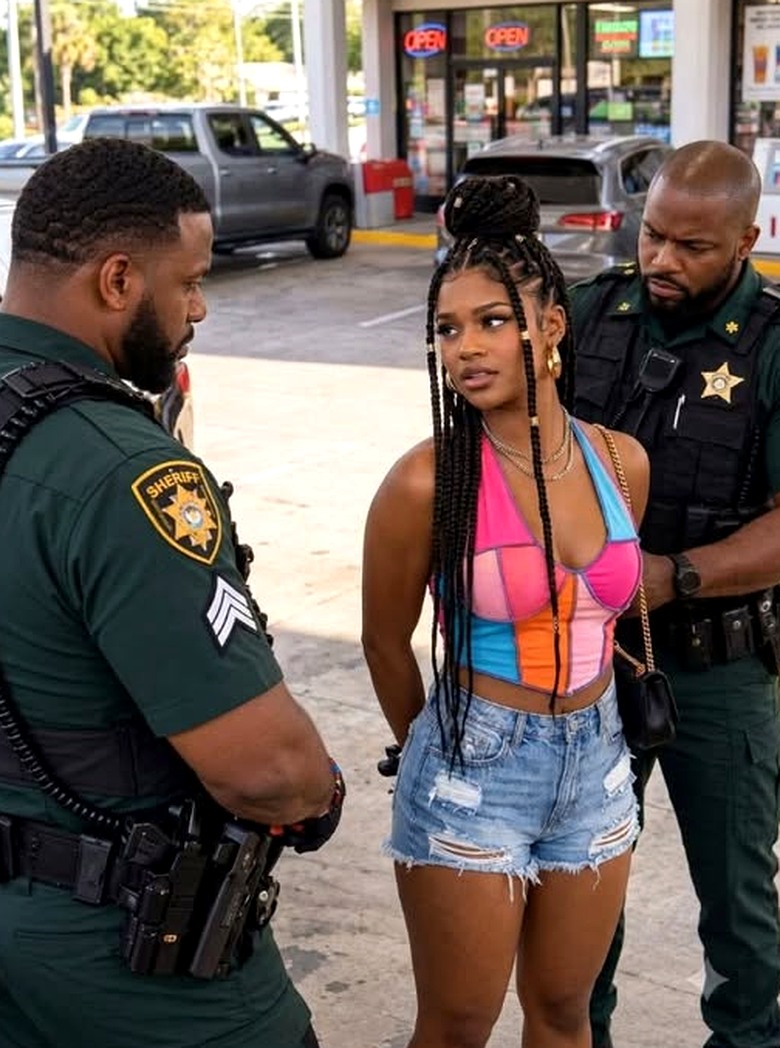
“My father?” I repeated, my voice carefully neutral. “He’s a retired judge. Why? Is that relevant to why you illegally detained me?” I watched as Davies’ face contorted with a mixture of fear and frustration. He glanced at Miller again, then back at the wallet in his hand, his gaze fixed on the embossed name: Judge Thomas Abernathy. My father. A man whose name carried significant weight in this state, a man known for his unwavering commitment to justice, and a man who, until recently, had been a mentor to the Chief of Police.
“We… we received a report,” Davies stammered, his composure crumbling. “A report of a vehicle matching your description… a possible… witness tampering case.” The explanation sounded flimsy, desperate. Witness tampering? It was absurd. I hadn’t even been near a courtroom in months, let alone attempted to influence a witness. "What witness?" I demanded, my voice gaining strength. "And what case?"
“It… it's a sensitive investigation,” Miller interjected, trying to salvage the situation. “We were just following procedure, ma’am. Routine questioning.” His attempt at professionalism felt hollow, a transparent cover for their initial, inexcusable behavior. “Routine questioning doesn’t involve dragging a woman out of her car and handcuffing her to the door!” I retorted, my anger flaring again.
Just then, a small crowd began to gather. A farmer working in a nearby field had noticed the commotion and called a neighbor, who called another. Soon, a dozen or so people were watching, their faces etched with curiosity and concern. Davies and Miller visibly stiffened under the scrutiny. The farmer, a grizzled man named Old Man Hemlock, stepped forward. “What’s going on here, officers?” he asked, his voice firm. "Why are you harassing this young lady?"
Davies attempted a weak explanation, but Hemlock cut him off. “I saw the whole thing. You stopped her for no reason, treated her with disrespect, and then resorted to intimidation. That’s not how we do things around here.” Other voices joined in, expressing their outrage and demanding an explanation. The situation was quickly spiraling out of control, and Davies and Miller knew it. The arrival of onlookers had stripped away their power, exposing their abuse of authority for all to see.
Davies finally confessed, his voice barely a whisper. “We… we thought she was someone else. We received a vague description… a woman connected to a case… we made a mistake.” It was a pathetic excuse, but it was enough to appease the crowd, at least temporarily. He released the handcuffs, and I rubbed my wrists, feeling the lingering sting of the metal.
“A mistake?” I said, my voice cold with fury. “You almost ruined my life based on a ‘mistake’? You humiliated me, violated my rights, and all because you ‘thought I was someone else’?” I paused, taking a deep breath. “I want your names, your badge numbers, and a formal apology. And I expect a full investigation into your conduct.” Davies and Miller mumbled their apologies, their faces flushed with shame. As I watched them slink away, I knew this wasn’t just about a traffic stop gone wrong. It was about power, privilege, and the importance of standing up to injustice. It was about a father’s legacy and a daughter’s determination to uphold it.
The next day, I received a call from the Chief of Police, a man who had once been a close friend of my father. He offered a sincere apology, assured me that both officers would be disciplined, and promised that steps would be taken to prevent such an incident from happening again. But the real satisfaction wasn't in their punishment. It was in knowing that I had refused to be silenced, that I had stood my ground, and that, in doing so, I had honored the values my father had instilled in me. And as I drove home that evening, the setting sun casting long shadows across the country road, I felt a profound sense of peace. The weight of silence had finally been lifted, replaced by the quiet strength of knowing I had done the right thing, and that karma, even on a quiet country road, had finally come full circle.