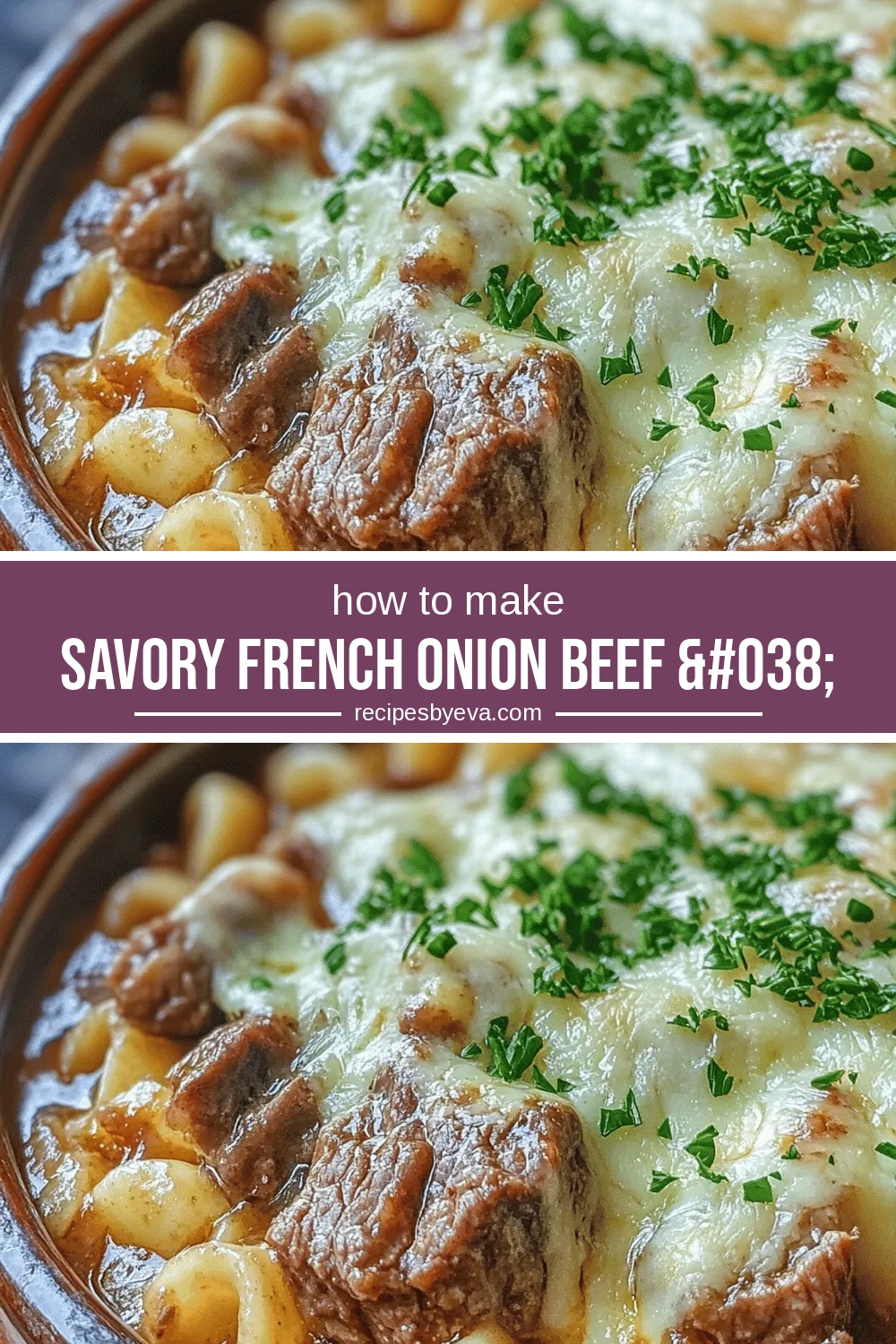
Savory French Onion Beef & Noodles: A Comforting Delight
 Save
Save
Imagine waking up to the aroma of caramelized onions mingling with rich beef broth, all nestled atop buttery egg‑noodles. That’s the comforting magic of our Savory French Onion Beef & Noodles, a dish that feels like a warm hug on a cool morning.
What makes this recipe truly special is the classic French onion technique—slow‑simmered onions until they’re sweet, deep amber, and perfectly glossy—combined with tender strips of beef and silky egg‑noodles. The result is a harmonious balance of sweet, savory, and umami flavors.
This dish is perfect for anyone who craves a hearty breakfast or brunch that can stand up to the heartiest of appetites. It’s especially beloved by families, brunch‑loving friends, and anyone who enjoys a touch of French elegance at the table.
The cooking process is straightforward: caramelize onions, sear beef, deglaze with wine and broth, then simmer with noodles until everything is coated in a glossy, flavorful sauce. A few quick steps, and you’ll have a restaurant‑quality plate ready to serve.
Why You'll Love This Recipe
Deep, Sweet Onion Flavor: Slow‑cooked onions develop a natural sweetness that lifts the beef and noodles, creating a layered taste that feels both rustic and refined.
One‑Pan Simplicity: All the magic happens in a single skillet, meaning fewer dishes, less cleanup, and more time to enjoy the meal with loved ones.
Brunch‑Ready Protein: Tender strips of beef provide a satisfying protein boost that pairs perfectly with the comforting starch of egg‑noodles for a balanced start to the day.
Elegant Yet Accessible: The dish feels upscale with its French onion roots, yet the ingredients are pantry‑friendly and the technique is approachable for home cooks of any skill level.
Tips & Tricks
Perfecting the Recipe
Low‑and‑slow onions. Keep the heat medium, not high, and stir occasionally. This prevents burning and encourages the natural sugars to caramelize evenly.
Pat beef dry. Moisture on the surface creates steam, which stops a proper sear. Use paper towels to blot the strips before seasoning.
Rest after searing. Let the beef rest for 2 minutes before adding to the sauce; this retains juices and prevents them from washing out the flavor.
Use a wide pan. A larger surface area promotes even browning and gives the onions room to spread out, reducing crowding.
Flavor Enhancements
Finish the sauce with a splash of sherry or a teaspoon of Dijon mustard for an extra layer of complexity. A pinch of smoked paprika adds subtle warmth, while a drizzle of truffle oil just before plating elevates the dish to gourmet status.
Common Mistakes to Avoid
Skipping the resting period for the beef leads to dry, over‑cooked meat. Also, adding the noodles directly into a dry pan will cause them to stick; always toss them with a bit of liquid to keep them moist and glossy.
Pro Tips
Use a meat thermometer. Aim for 130‑135 °F for medium‑rare beef; it will finish cooking in the sauce without drying out.
Pre‑toast the noodles. Lightly toast them in the skillet before adding broth for a nutty flavor that deepens the overall profile.
Finish with butter. Swirl in a tablespoon of cold butter at the end of cooking for a silky, glossy finish.
Season in layers. Add a pinch of salt after caramelizing onions, then adjust again after the broth is incorporated. Layered seasoning builds depth.
Variations
Ingredient Swaps
Substitute beef with thinly sliced pork shoulder for a sweeter profile, or use chicken thighs for a lighter option. Swap egg‑noodles for wide pappardelle or even rice noodles if you prefer a gluten‑free texture. For a vegetarian twist, replace the meat with hearty mushrooms such as cremini or portobello.
Dietary Adjustments
To make the dish gluten‑free, choose rice noodles and ensure the broth is certified gluten‑free. For a dairy‑free version, replace butter with olive oil and omit any finishing butter. Keto diners can swap noodles for shirataki or spiralized zucchini and use a low‑carb sweetener instead of wine sugar.
Serving Suggestions
Pair the dish with a simple arugula salad dressed in lemon vinaigrette for brightness. A side of toasted sourdough or a crusty baguette is perfect for sopping up extra sauce. For a festive brunch, serve alongside poached eggs and a drizzle of hollandaise.
Storage Info
Leftover Storage
Cool the dish to room temperature within two hours, then transfer to an airtight container. Refrigerate for up to 4 days. For longer keeping, portion into freezer‑safe bags, squeeze out excess air, and freeze for up to 3 months. Label with date for easy reference.
Reheating Instructions
Reheat gently on the stovetop over medium‑low heat, adding a splash of broth or water to restore moisture. Stir occasionally until steaming hot, about 5‑7 minutes. In a pinch, microwave in a covered bowl on medium power for 2‑3 minutes, stirring halfway through, and finish with a drizzle of fresh sauce.
Frequently Asked Questions
Can I prepare this dish ahead of time?
What if I only have frozen beef strips?
Which side dishes complement this brunch entrée?
This Savory French Onion Beef & Noodles recipe blends classic French technique with comforting brunch vibes, delivering sweet caramelized onions, tender beef, and silky noodles in every bite. With clear steps, storage tips, and creative variations, you have everything needed to make it a repeat favorite. Feel free to experiment with proteins, herbs, or side dishes—cooking is your canvas. Serve it hot, share it with loved ones, and enjoy the comforting delight you’ve created.
Savory French Onion Beef & Noodles: A Comforting Delight
Delicious Savory French Onion Beef & Noodles: A Comforting Delight
Ingredients
Main Ingredients
- 1 lb (450 g) beef chuck, thinly sliced against the grain
- 2 large yellow onions, thinly sliced
- 8 oz (225 g) egg‑noodles
Onion & Soup Base
- 2 tbsp unsalted butter
- 1/2 cup dry white wine
- 2 cups beef broth (low‑sodium)
Seasonings & Garnish
- 1 tsp fresh thyme leaves (or 1/2 tsp dried)
- 1 bay leaf
- Salt and freshly ground black pepper, to taste
- 2 tbsp fresh parsley, chopped (for garnish)
Instructions
Building the Sauce
- Deglaze. Pour the white wine into the pan, scraping up any browned bits (fond) from the bottom. Let the wine reduce by half, about 2‑3 minutes, which concentrates its acidity and sweetness.
- Add broth and aromatics. Stir in the beef broth, thyme, and bay leaf. Bring to a gentle simmer, allowing the flavors to meld for 5 minutes. The sauce should be fragrant and slightly thickened.
- Combine beef and onions. Return the seared beef to the skillet, nestling it among the caramelized onions. Reduce heat to low and let everything simmer together for another 8‑10 minutes, until the beef is tender and the sauce clings to the meat.
- Cook the noodles. Meanwhile, bring a pot of salted water to a boil. Add the egg‑noodles and cook according to package directions (usually 6‑8 minutes). Drain, reserving ¼ cup of cooking water.
- Finish the dish. Toss the cooked noodles into the skillet with the beef and onions. If the sauce seems too thick, stir in a splash of the reserved noodle water. Season with additional salt and pepper if needed, then remove the bay leaf.
Similar Recipes
 Dinner
Cheesy Garlic Chicken Wraps: A Flavorful Culinary Adventure
Delicious Cheesy Garlic Chicken Wraps: A Flavorful Culinary Adventure
 Dinner
Budget-Friendly Lentil Curry for NFL Playoff Dinners
Learn how to make delicious Budget-Friendly Lentil Curry for NFL Playoff Dinners. Easy recipe with step-by-step…
 Dinner
Garlic Roasted Green Beans: A Flavorful Side Dish
Delicious Garlic Roasted Green Beans: A Flavorful Side Dish
 Dinner
Cheesy Fall Chili Mac Cups: The Perfect Autumn Comfort Food
Delicious Cheesy Fall Chili Mac Cups: The Perfect Autumn Comfort Food
 Dinner
Heavenly Creamy Potato Soup: A Comforting Delight
Delicious Heavenly Creamy Potato Soup: A Comforting Delight
 Dinner
Mouthwatering Stuffed Italian Meatloaf for Family Dinners
Learn how to make delicious Mouthwatering Stuffed Italian Meatloaf for Family Dinners. Easy recipe with step-by-step…
 Dinner
Crispy Polenta Cakes with Tomato Sauce: A Culinary Delight
Delicious Crispy Polenta Cakes with Tomato Sauce: A Culinary Delight
 Dinner
Crispy Chicken Parmigiana: A Delectable Classic
Delicious Crispy Chicken Parmigiana: A Delectable Classic

Eva
I cook these recipes at home before they ever land here — simple ingredients, clear steps.