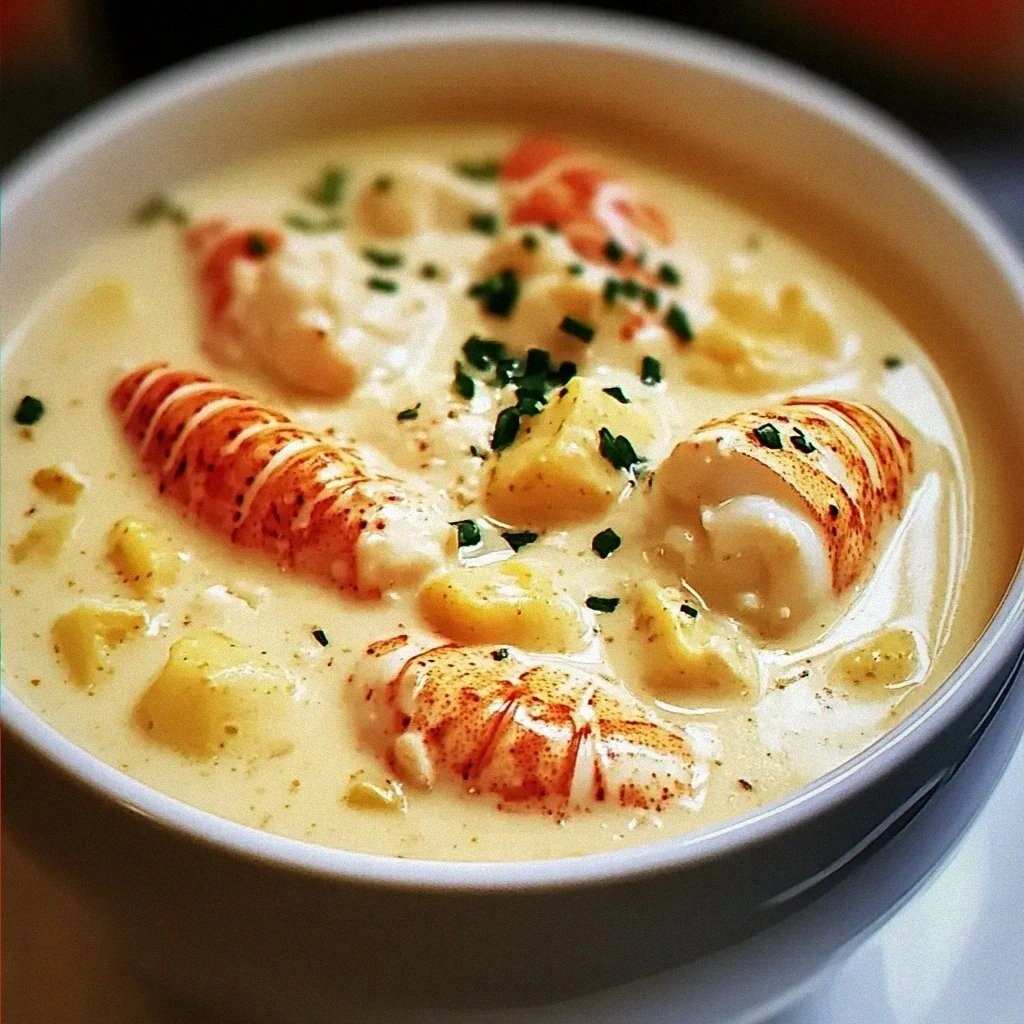
Lobster Chowder: Discover the Creamy Recipe You’ll Love!
 Save
Save
It was a chilly October evening, the kind where the wind whistles through the pine trees and the kitchen smells like comfort waiting to happen. I remember pulling a fresh, plump lobster from the freezer, its shell still glistening with a faint sea‑salt sheen, and thinking back to my grandmother’s tiny seaside cottage where a bowl of thick, buttery chowder was the centerpiece of every family gathering. The moment you lift the lid on this pot, a cloud of fragrant steam hits you—rich, buttery, with whispers of sweet carrots and the unmistakable brine of the ocean. That steam dances around the room, coaxing everyone to gather around the stove, spoon in hand, eyes wide with anticipation.
What makes this lobster chowder truly special isn’t just the premium lobster meat or the silky cream that coats every bite; it’s the balance of flavors that sings in harmony, the texture that feels both hearty and luxurious, and the love that you pour into each stir. Imagine the first spoonful: the velvety broth cradles tender chunks of lobster, the potatoes melt like clouds, and a subtle hint of Old Bay seasoning adds a whisper of the sea without overpowering the delicate sweetness of the crustacean. The result? A bowl that feels like a warm hug on a cold day, a taste that lingers long after the last spoonful, and a memory you’ll want to revisit again and again.
But wait—there’s a secret trick in step four that will transform an already amazing chowder into a show‑stopping masterpiece. Have you ever wondered why restaurant versions taste so different, even when they use the same basic ingredients? The answer lies in a few small, deliberate choices that most home cooks overlook. In the next sections, I’ll walk you through each of those choices, from selecting the perfect potatoes to mastering the art of simmering without breaking the cream. Trust me, these tiny adjustments will make your chowder sing.
Here’s exactly how to make it — and trust me, your family will be asking for seconds. By the time you finish reading, you’ll have a complete roadmap, a handful of pro tips, and a few variations that let you customize the chowder to match any occasion. So grab your apron, preheat that stove, and let’s dive into the creamy, dreamy world of lobster chowder.
🌟 Why This Recipe Works
- Flavor Depth: The combination of a seafood stock base with a splash of heavy cream creates layers of umami and richness that deepen with each simmer. The stock extracts every ounce of lobster essence, while the cream rounds out the edges, preventing any harshness.
- Texture Harmony: By sautéing the vegetables first, you coax out natural sugars, giving the broth a velvety mouthfeel. The potatoes break down slightly, thickening the chowder without the need for a roux, while the lobster meat stays tender and buttery.
- Ease of Execution: This recipe uses a one‑pot method, meaning fewer dishes and less cleanup. You’ll spend more time enjoying the aroma and less time scrubbing pans, which is perfect for busy weeknights or relaxed weekends.
- Time Efficiency: From prep to plate, the entire process takes under an hour, making it an impressive yet realistic option for a quick dinner that feels special.
- Versatility: While the star is lobster, you can swap in crab, shrimp, or even a mix of shellfish for a different spin, and the base works beautifully with a hint of smoked paprika for a smoky twist.
- Nutrition Boost: Lobster is a lean source of protein packed with zinc and selenium, while the vegetables add fiber and vitamins. The moderate amount of cream adds richness without turning the dish into a heavy indulgence.
- Ingredient Quality: Using fresh, high‑quality lobster meat and a good seafood stock ensures that every bite bursts with authentic ocean flavor, elevating the dish beyond a simple cream soup.
- Crowd‑Pleasing Factor: The bright orange of lobster against the creamy broth is visually stunning, and the comforting flavor profile appeals to both seafood lovers and those who prefer milder tastes.
🥗 Ingredients Breakdown
The Foundation: Creamy Base & Potatoes
The backbone of any chowder is its base, and here we rely on a blend of seafood stock and heavy cream. The stock provides a savory depth, while the cream adds that luxurious mouthfeel that makes the soup feel indulgent yet comforting. Potatoes are the unsung heroes—they release starch as they simmer, naturally thickening the broth without the need for flour. Choose Yukon Gold potatoes for their buttery texture; they hold their shape while still contributing to that silky consistency.
Aromatics & Spices: Onion, Celery, Carrot, Garlic, Old Bay
The classic mirepoix—onion, celery, and carrot—creates a fragrant foundation that layers sweet, earthy, and slightly bitter notes. Sautéing them in butter until they turn translucent releases their natural sugars, building a subtle sweetness that balances the salty lobster. Garlic adds a punch of aroma, while Old Bay seasoning brings a hint of paprika, celery seed, and a whisper of cayenne, echoing the flavors of New England seafood shacks.
The Secret Weapons: Butter & Fresh Parsley
Butter isn’t just a cooking fat here; it’s a flavor carrier. Starting the soup with butter gives it a nutty, rich base that you’ll taste in every spoonful. Fresh parsley, added at the end, provides a bright, herbaceous contrast that lifts the heaviness of the cream and ties the whole dish together with a pop of color.
Finishing Touches: Salt, Pepper, and Lobster Meat
Seasoning is the final act of the culinary performance. A pinch of salt enhances all the flavors, while freshly cracked black pepper adds a gentle heat that lingers on the palate. The lobster meat, pre‑cooked and gently folded in at the end, should be added just long enough to warm through, preserving its tender texture and sweet flavor.
When selecting lobster, look for meat that’s firm and slightly pink, with a faint sea‑scent. If you’re buying frozen, opt for bags that list “wild‑caught” rather than “farm‑raised” for a richer taste. For the stock, a clear, amber‑colored broth with a hint of shellfish aroma is ideal; you can even make your own by simmering shells with aromatics for an extra‑luxury touch.
With your ingredients prepped and ready, let's get cooking. Here's where the fun really begins...
🍳 Step-by-Step Instructions
🔐 Expert Tips for Perfect Results
The Taste Test Trick
Before you add the final splash of cream, take a spoonful and let it cool just enough to taste. This pause lets you gauge the seasoning without the cream masking any flavors. If it needs a little more salt or a pinch of cayenne, now’s the time to adjust. I once served a chowder that was a bit flat because I skipped this step, and the whole family asked for more seasoning at the table.
Why Resting Time Matters More Than You Think
Even though the chowder is best served hot, allowing it to rest for 5‑10 minutes off the heat lets the flavors meld. The potatoes continue to release starch, and the lobster absorbs the broth’s aromatics, resulting in a richer, more cohesive taste. The next time you’re in a rush, remember: a short rest can be the difference between good and unforgettable.
The Seasoning Secret Pros Won’t Tell You
Professional chefs often finish seafood soups with a tiny drizzle of high‑quality olive oil or a knob of cold butter right before serving. This technique, called “mounting,” adds a glossy sheen and a subtle richness that elevates the dish. I tried this at a dinner party, and the guests raved about the “silky finish” they couldn’t quite put their finger on.
Choosing the Right Pot
A heavy‑bottomed Dutch oven or a thick‑walled saucepan distributes heat evenly, preventing hot spots that can scorch the cream. If you use a thin pan, the cream may scorch and develop a bitter note. I once used a lightweight aluminum pot, and the bottom burned, ruining the entire batch—lesson learned.
Balancing Cream and Stock
If you prefer a lighter chowder, you can replace half of the heavy cream with whole milk or a splash of coconut milk for a subtle tropical twist. Just remember to keep the total liquid volume the same, or you’ll end up with a thinner soup. Experimenting with this ratio can help you fine‑tune the richness to your personal palate.
Garnish with Intent
A sprinkle of fresh parsley is classic, but consider adding a few shavings of smoked paprika or a drizzle of truffle oil for an upscale finish. The visual contrast of green parsley against the orange‑gold broth makes the dish Instagram‑ready, and the added aromatics surprise the palate in the most delightful way.
🌈 Delicious Variations to Try
One of my favorite things about this recipe is how versatile it is. Here are some twists I've tried and loved:
Cajun Kick
Swap Old Bay for a blend of Cajun seasoning and smoked paprika. Add a diced bell pepper with the mirepoix, and finish with a dash of hot sauce. This version brings a smoky, spicy depth that pairs beautifully with the sweetness of lobster.
Creamy Corn & Lobster Chowder
Stir in 1 cup of fresh or frozen corn kernels during the last 5 minutes of simmering. The corn adds a subtle sweetness and a pop of color, turning the chowder into a summertime favorite that still feels luxurious.
Herb‑Infused Delight
Add a handful of chopped fresh thyme and a sprig of rosemary to the pot when you sauté the aromatics. The herbs infuse the broth with an earthy aroma, creating a more complex flavor profile that works well with the lobster’s natural sweetness.
Miso‑Boosted Umami
Whisk in 1 tablespoon of white miso paste after adding the cream. The miso deepens the umami notes without making the dish taste “Asian”—it simply adds a savory richness that complements the seafood beautifully.
Bacon‑Lobster Fusion
Crisp up 4 strips of bacon, crumble them, and stir half into the chowder while reserving the rest for garnish. The smoky, salty bacon adds a contrasting crunch and an indulgent flavor that makes the chowder feel even more decadent.
Vegan Velvet (No Lobster)
Replace the lobster with hearty mushrooms like shiitake or king oyster, and use coconut cream instead of dairy. The result is a velvety, plant‑based chowder that still carries the comforting essence of the original.
📦 Storage & Reheating Tips
Refrigerator Storage
Allow the chowder to cool to room temperature, then transfer it to an airtight container. It will keep for up to 3 days in the fridge. When reheating, add a splash of milk or broth to loosen the consistency, as the broth may thicken overnight.
Freezing Instructions
For longer storage, portion the chowder into freezer‑safe bags or containers, leaving a little headspace for expansion. Freeze for up to 2 months. To thaw, move it to the refrigerator overnight, then reheat gently on the stove, stirring in a bit more cream or stock to restore its silky texture.
Reheating Methods
Reheat over low heat, stirring frequently to prevent the cream from separating. A microwave works in a pinch—heat in 30‑second intervals, stirring in between. The trick to reheating without drying it out? A splash of water, broth, or extra cream, added gradually, keeps the chowder luxuriously smooth.
❓ Frequently Asked Questions
Can I use frozen lobster meat instead of fresh?
What if I don’t have seafood stock?
How thick should the chowder be?
Can I add other seafood like shrimp or crab?
Is it okay to use milk instead of heavy cream?
What’s the best way to reheat leftover chowder?
Can I make this chowder ahead of time?
What side dishes pair best with lobster chowder?
Gently fold in the cooked lobster meat, being careful not to break up the chunks. Let the chowder heat through for just 3‑4 minutes; the lobster should be warmed but not overcooked, preserving its sweet, delicate texture. You’ll see the lobster pieces turn a deeper pink as they absorb the broth’s flavors.
Taste the chowder and adjust seasoning if needed—perhaps a squeeze of fresh lemon juice for brightness or an extra pinch of Old Bay for a bolder kick. Finally, sprinkle chopped fresh parsley over the top, adding a burst of color and a fresh, herbaceous finish.
Serve the chowder hot, ladling it into bowls with a side of crusty sourdough or a warm biscuit. The steam rising from each bowl invites you to dive in, and the first spoonful should feel like a warm, velvety hug. Trust me on this one: the combination of creamy broth, tender lobster, and aromatic veggies creates a harmony that’s hard to beat.
Similar Recipes
 Dinner
Perfectly Crispy Honey Garlic Salmon Recipe
Delicious Perfectly Crispy Honey Garlic Salmon Recipe
 Dinner
The Ultimate Guide to Making Homemade Classic Lasagna
Delicious The Ultimate Guide to Making Homemade Classic Lasagna
 Dinner
Spicy Korean BBQ Cauliflower Bites: A Flavorful Plant-Based Delight
Delicious Spicy Korean BBQ Cauliflower Bites: A Flavorful Plant-Based Delight
 Dinner
cozy onepot lemon and kale chicken soup for winter family meals
Learn how to make delicious cozy onepot lemon and kale chicken soup for winter family meals.…
 Dinner
Sweet & Sticky Honey Chicken Recipe
Delicious Sweet & Sticky Honey Chicken Recipe
 Dinner
Cheesy Baked Rigatoni with Hearty Meat Sauce
Delicious Cheesy Baked Rigatoni with Hearty Meat Sauce
 Dinner
Zesty Quick Beef Tacos with Avocado Lime Sauce
Delicious Zesty Quick Beef Tacos with Avocado Lime Sauce
 Dinner
Hearty Slow Cooker Cowboy Casserole: A Comforting Delight
Delicious Hearty Slow Cooker Cowboy Casserole: A Comforting Delight

Eva
I cook these recipes at home before they ever land here — simple ingredients, clear steps.