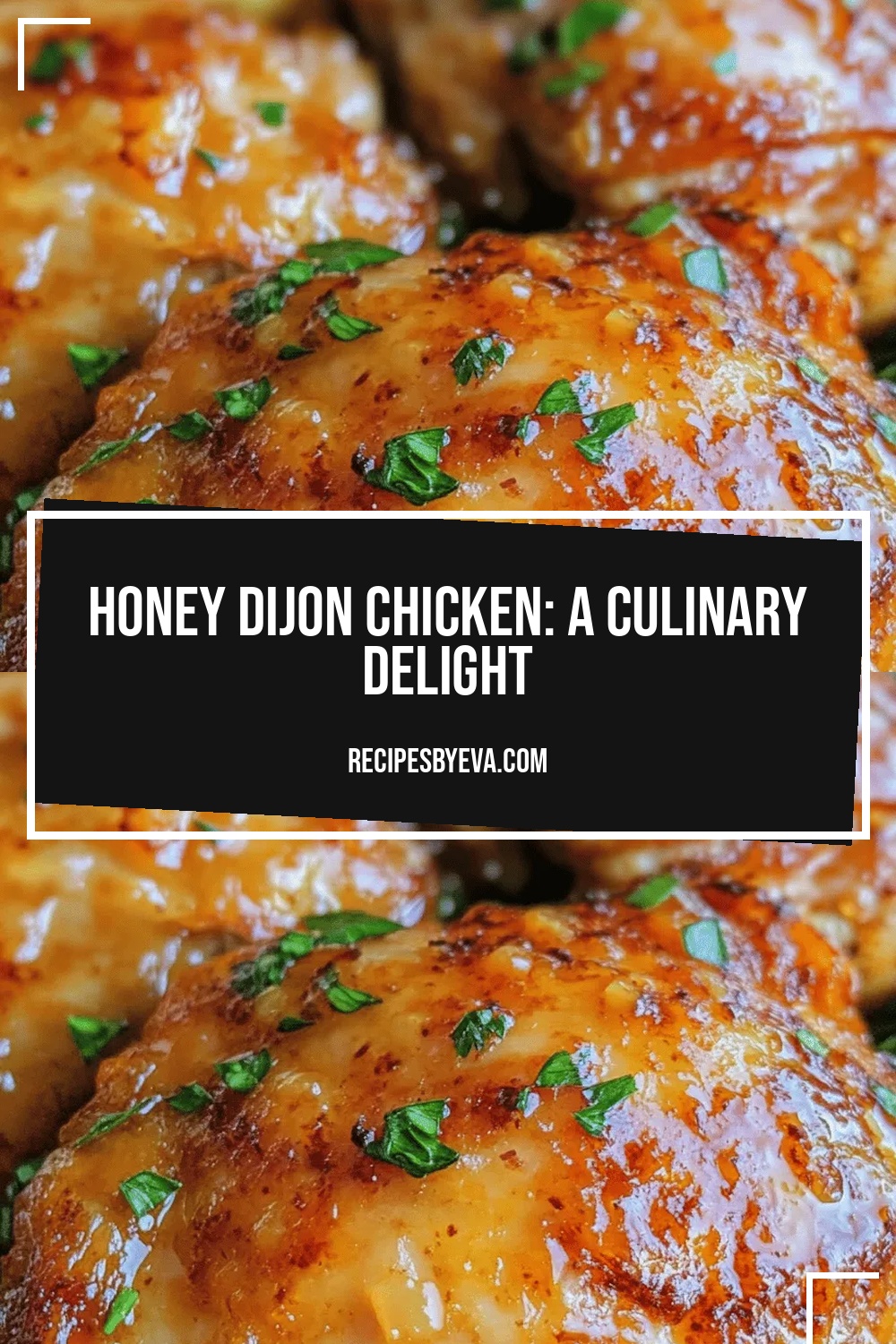
Honey Dijon Chicken: A Culinary Delight
 Save
Save
Imagine a golden‑browned chicken breast glazed with a silky, sweet‑tangy sauce that sings of honey and Dijon. This is the magic of Honey Dijon Chicken, a dish that turns a simple weeknight dinner into a restaurant‑quality experience without the fuss.
What makes it truly special is the harmonious marriage of mellow honey, sharp Dijon mustard, and a hint of garlic—all balanced by a splash of lemon juice. The result is a glossy coating that clings to each bite, delivering a burst of flavor that’s both comforting and sophisticated.
This recipe is perfect for busy families, casual entertaining, or anyone craving a satisfying protein that feels a little indulgent. Serve it for a quick lunch, a family dinner, or as the star of a weekend gathering.
The cooking process is straightforward: season and sear the chicken, whip up a quick honey‑mustard glaze, finish in the oven, and garnish with fresh herbs. In under an hour you’ll have a dish that looks as good as it tastes.
Why You'll Love This Recipe
Bright & Balanced Flavors: The sweet honey softens the bite of Dijon, while lemon adds a refreshing lift, creating a sauce that’s never one‑dimensional.
Quick Weeknight Solution: With only fifteen minutes of prep and a single‑pan finish, you can have a gourmet‑style dinner on the table in under an hour.
Versatile Pairings: The glaze complements rice, potatoes, or fresh greens alike, so you can tailor the side dishes to whatever you have on hand.
Family‑Friendly Appeal: Kids love the subtle sweetness, while adults appreciate the sophisticated mustard note, making it a crowd‑pleaser for all ages.
Tips & Tricks
Perfecting the Recipe
Room‑Temperature Chicken: Let the breasts sit out for 10–15 minutes before cooking. This ensures the interior reaches temperature at the same rate as the exterior, preventing a raw center.
Pat Dry Before Searing: Excess moisture creates steam, which inhibits browning. A dry surface yields a crisp, caramelized crust that locks in flavor.
Flavor Enhancements
Add a splash of white wine or chicken broth to the glaze before simmering for added depth. Finish with a tablespoon of cold butter swirled in at the end for a richer, silkier texture. A pinch of red‑pepper flakes introduces a subtle heat that balances the sweetness.
Common Mistakes to Avoid
Skipping the resting period results in dry, over‑cooked meat because the juices spill out when sliced. Also, avoid turning the heat up too high; burnt glaze will taste bitter, while a gentle simmer preserves the honey’s delicate sweetness.
Pro Tips
Use a Cast‑Iron Skillet: It retains heat superbly, giving you a consistent sear and an even oven finish.
Invest in a Instant‑Read Thermometer: Checking for 165°F (74°C) guarantees safety without overcooking.
Deglaze with a Touch of Citrus: A squeeze of lemon after the sauce reduces brightens the flavor and cuts any residual sweetness.
Batch the Sauce: Make extra glaze and store it in the fridge; it works wonderfully as a dressing for salads or a dip for roasted veggies.
Variations
Ingredient Swaps
Replace chicken with turkey cutlets, pork tenderloin medallions, or firm tofu for a vegetarian twist. Swap honey for maple syrup or agave nectar to introduce a different sweet nuance. For a deeper mustard flavor, try whole‑grain Dijon instead of smooth.
Dietary Adjustments
To keep it gluten‑free, verify that your Dijon mustard and any added sauces are certified gluten‑free. For a low‑carb version, reduce honey to 1 ½ tablespoons and add a splash of sugar‑free maple‑style syrup. Use coconut oil instead of olive oil for a dairy‑free, paleo‑friendly approach.
Serving Suggestions
Pair the chicken with fluffy basmati rice, quinoa, or buttery mashed potatoes to soak up the glaze. Roasted asparagus, green beans, or a crisp cucumber‑radish salad provide a fresh contrast. For a more indulgent meal, serve alongside warm, crusty sourdough or a cheesy polenta.
Storage Info
Leftover Storage
Allow the chicken and sauce to cool to room temperature (no more than 2 hours), then transfer to an airtight container. Refrigerate for up to 4 days. For longer keeping, portion into freezer‑safe bags, squeeze out excess air, and freeze for up to 3 months. Label with the date to stay organized.
Reheating Instructions
Reheat gently in a 350°F (175°C) oven, covered with foil, for 12–15 minutes until the interior reaches 165°F (74°C). This method preserves the sauce’s sheen. In a microwave, place a slice on a plate, add a splash of broth or water, cover loosely, and heat on medium power for 1–2 minutes, stirring halfway through.
Frequently Asked Questions
Can I make this recipe ahead of time?
Can I use frozen chicken breasts?
What sides work best with Honey Dijon Chicken?
How do I know when the chicken is perfectly cooked?
This Honey Dijon Chicken recipe delivers a perfect blend of sweet, tangy, and savory flavors while staying simple enough for any weeknight. We’ve covered ingredient selection, precise cooking steps, storage tips, and creative variations so you can adapt it to your pantry and dietary needs. Feel free to experiment with herbs, spices, or alternate proteins—cooking is your canvas. Enjoy the burst of flavor and the satisfaction of a restaurant‑worthy dish made at home!
Honey Dijon Chicken: A Culinary Delight
Delicious Honey Dijon Chicken: A Culinary Delight
Ingredients
Main Ingredients
- 4 boneless, skinless chicken breasts (about 6 oz each)
- 2 tablespoons olive oil
Sauce/Marinade
- 3 tablespoons honey
- 3 tablespoons Dijon mustard
- 1 tablespoon apple cider vinegar
- 2 cloves garlic, minced
- 1 teaspoon lemon zest
- 1 tablespoon fresh lemon juice
Seasonings & Garnish
- Salt and freshly ground black pepper, to taste
- ½ teaspoon smoked paprika (optional, for subtle smokiness)
- 2 tablespoons fresh parsley, chopped (for garnish)
Instructions
Searing & Oven Finish
- Heat the Skillet. Place a large oven‑safe skillet over medium‑high heat. Add the olive oil and wait until it shimmers, about 2 minutes. The hot oil creates a barrier that locks in juices and produces a golden crust.
- Sear the Breasts. Lay the chicken in the pan without crowding. Cook 4–5 minutes per side, resisting the urge to move them, until each side is deep golden brown. This step builds flavor through the Maillard reaction.
- Make the Glaze. Reduce heat to medium. Add the minced garlic and sauté for 30 seconds until fragrant. Stir in honey, Dijon mustard, apple cider vinegar, lemon zest, and lemon juice. Scrape the browned bits from the pan; they are flavor gold.
- Simmer. Allow the mixture to bubble gently for 2–3 minutes, stirring occasionally, until it thickens enough to coat the back of a spoon. This concentration intensifies the sweet‑tangy profile.
- Finish in the Oven. Transfer the skillet to a preheated 375°F (190°C) oven. Bake for 12–15 minutes, or until the internal temperature reaches 165°F (74°C). Baste the chicken with the pan sauce halfway through for extra gloss.
Similar Recipes
 Dinner
Garlic Twisted Pasta with Cajun Ground Beef and Alfredo Velveeta
Learn how to make delicious Garlic Twisted Pasta with Cajun Ground Beef and Alfredo Velveeta. Easy…
 Dinner
cozy onepot lentil and carrot soup for healthy winter dinners
Warm up with this easy one-pot lentil carrot soup—healthy, hearty, and ready in 30 minutes. Perfect…
 Dinner
Buffalo Chicken Alfredo Zoodle Nests: A Flavorful Culinary Delight
Delicious Buffalo Chicken Alfredo Zoodle Nests: A Flavorful Culinary Delight
 Dinner
budgetfriendly roasted carrot and parsnip medley for january suppers
Learn how to make delicious budgetfriendly roasted carrot and parsnip medley for january suppers. Easy recipe…
 Dinner
Cheesy Baked Rigatoni with Hearty Meat Sauce
Delicious Cheesy Baked Rigatoni with Hearty Meat Sauce
 Dinner
Creamy Loaded Baked Potato Soup Recipe
Delicious Creamy Loaded Baked Potato Soup Recipe
 Dinner
Savory Herb Butter Roasted Chicken Recipe: A Flavorful Family Feast
Delicious Savory Herb Butter Roasted Chicken Recipe: A Flavorful Family Feast
 Dinner
budgetfriendly one pot winter vegetable and sausage stew
Learn how to make delicious budgetfriendly one pot winter vegetable and sausage stew. Easy recipe with…

Eva
I cook these recipes at home before they ever land here — simple ingredients, clear steps.